Worried about gaming chair quality? Sourcing without clear testing standards risks your brand and investment. Requiring the right protocols from your manufacturer is the key to ensuring safety and durability.
B2B buyers should require a clear AQL for quality inspection, BIFMA certification1 for the US market, EN 13352 for Europe, and specific fire safety compliance3 like TB 117-20134. These tests guarantee structural integrity, safety, and market access.
I have been in the gaming chair manufacturing business for a long time. I work at Ergomakers, and we help brands create their own chairs. A good-looking chair is nice, but a safe and durable chair is essential. Understanding the specific tests is the most important part of my job. Seeing these names in a table is one thing. Understanding why they are so important is another. Let’s look at each one more closely, so you can have more confident conversations with your manufacturing partners.
What is AQL and why does it matter for quality control?
Struggling with inconsistent quality in large orders? A single bad batch can ruin your reputation. Using the Acceptance Quality Limit (AQL)5 system ensures every shipment meets your pre-defined standards.
AQL is a statistical sampling method that determines the maximum number of defective units acceptable in a production batch. It allows you to verify the quality of a large order without checking every single item, saving time and money while managing risk.

Breaking Down AQL
AQL sounds technical, but it is a simple idea. You cannot check every single chair in a big order. It would take too much time and money. So, you check a smaller, random group of chairs. AQL is the rule that decides if the whole batch is good enough based on this small sample. It tells you how many faulty chairs are acceptable. We usually talk about two types of faults:
- Major Defects6: Problems with the chair's function or appearance, like a broken lever or a big scratch. A common standard is AQL 2.5, meaning you accept the batch if less than 2.5% of the sample has major faults.
- Critical Defects7: Serious safety issues. The standard is often AQL 0, meaning you reject the whole batch if even one chair has a critical safety problem.
I remember when we did a pre-shipment inspection for a big European client. The AQL check found a problem with the stitching. Because of our AQL rule, we stopped the shipment, checked every chair, and fixed the issue. This protected our client from customer complaints and showed why having a clear AQL standard is so important.
Why are BIFMA standards essential for the North American market?
Want to sell in the US but keep hitting roadblocks with major retailers? Without the right certification, your high-quality chairs might be ignored. BIFMA certification1 is the key to unlocking this market.
BIFMA (Business and Institutional Furniture Manufacturers Association) standards are the benchmark for furniture safety and performance in North America. Passing tests like ANSI/BIFMA X5.18 proves your chair is stable, durable, and safe, making it a requirement for most major retailers.
Getting Into the US Market
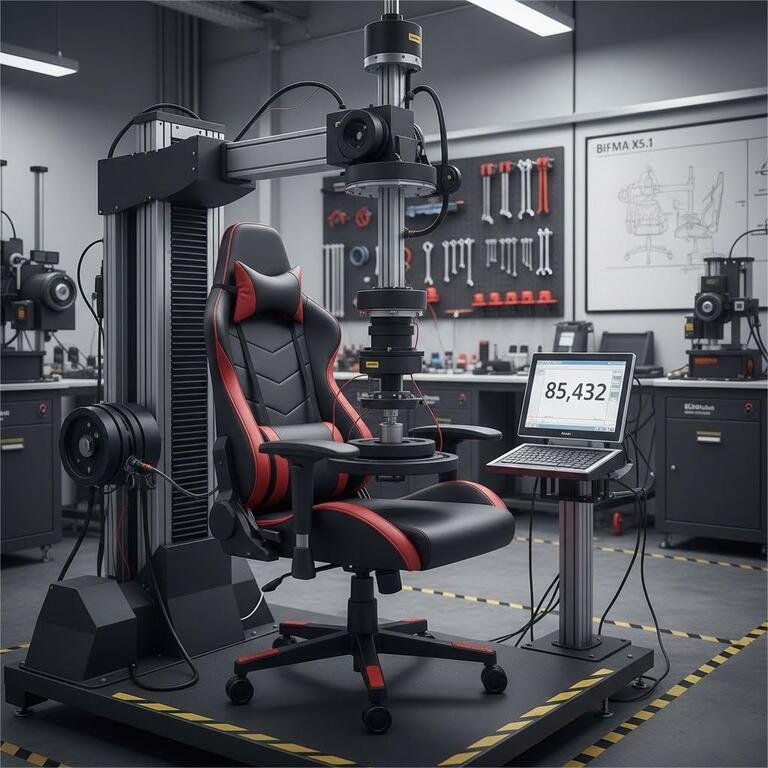
If you want to sell gaming chairs in North America, you will hear "BIFMA" a lot. This is not just one test. It is a whole series of tests that check everything. Some of the key tests in the ANSI/BIFMA X5.18 standard include:
| Test Type | Purpose | Why It's Important |
|---|---|---|
| Stability Test9 | Pushes on the chair to ensure it doesn’t tip over easily. | Prevents accidents and injuries, especially during dynamic use. |
| Durability Test10 | Simulates a person sitting and getting up thousands of times. | Confirms the chair’s long-term structural integrity. |
| Drop Test11 | A heavy weight is dropped onto the seat. | Ensures the chair can handle sudden impacts and shocks. |
| Swivel Fatigue Test12 | Turns the chair back and forth for many cycles. | Checks the base and swivel mechanism for wear and tear. |
I worked with a new brand that wanted to enter the US market. They had a great design, but major retailers would not talk to them without BIFMA. We helped re-engineer parts of their chair to pass the tests. Once they had that certificate, it was like a key that opened doors for them.
How do EN standards differ from BIFMA for the European market?
Assuming BIFMA certification1 is enough for the EU market? This common mistake can lead to rejected shipments and lost sales. European buyers have their own specific requirements that you cannot ignore.
EN (European Norm) standards, specifically EN 13352, are the primary safety and durability requirements for chairs in Europe. While similar to BIFMA, they have unique tests and criteria that are mandatory for accessing the EU market. BIFMA alone is not a substitute.
Meeting European Requirements
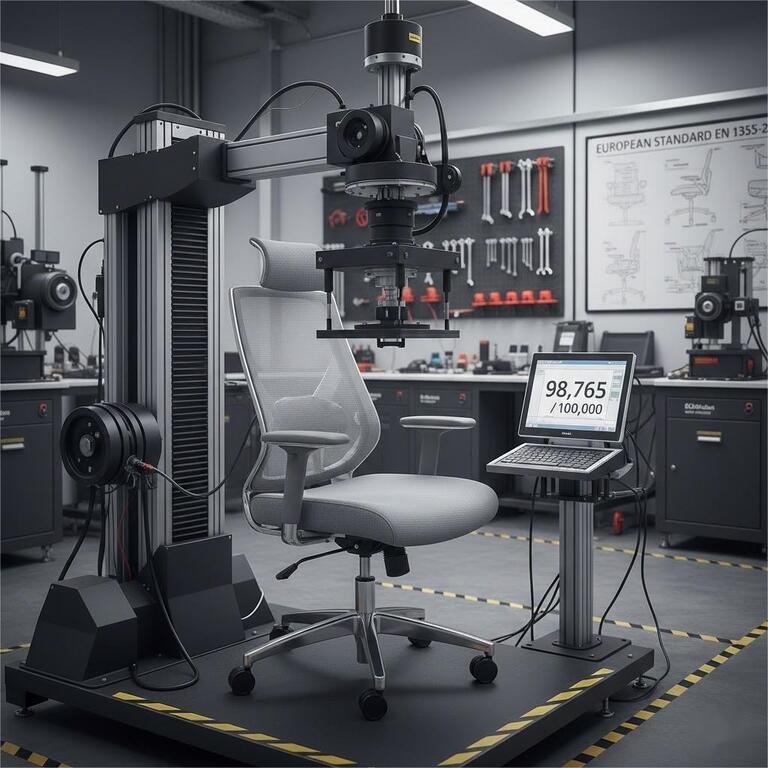
Just like BIFMA is key for America, the EN standards are essential for Europe. For chairs, the main standards are EN 13352-2 (strength and durability) and EN 13352-3 (safety). They cover the chair's structural integrity and user safety. While many tests seem similar to BIFMA, there are key differences. For instance, the EN 13352 standard includes a 100,000-cycle swivel fatigue test that is very important for many European clients.
Some buyers think that if a chair has BIFMA certification1, it is automatically fine for Europe. This is not true. I had a client in Germany who was very strict about this. They said, "BIFMA is good, but our market requires EN 13352." We had to provide test reports showing the chair passed all the EN tests. It was extra work, but it was necessary. This shows that you must know the specific rules for the market you are selling to. A good manufacturing partner should offer testing for both BIFMA and EN standards.
What fire safety regulations must your gaming chairs meet?
Overlooking fire safety regulations is a massive risk. Using the wrong materials can lead to failed compliance, huge legal problems, and dangerous products. This is a non-negotiable part of manufacturing.
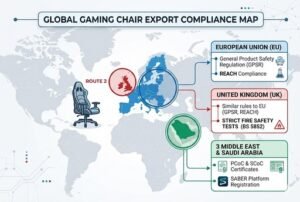
Your gaming chairs must meet specific regional fire safety standards. For the US, this is typically California's TB 117-20134. For the UK and Europe, standards like BS 585213 or EN 102114 are required. These ensure the materials resist ignition from a smolder.

A Critical Safety Check
Fire safety is a topic no one can ignore. The materials in a gaming chair, like foam and fabric, must meet strict rules. These rules are different depending on where you sell the chair. Here's a simple breakdown:
- United States: The most common standard is California's TB 117-20134. This test checks if the materials will ignite from a smoldering source, like a cigarette. It is mandatory for selling furniture in the US.
- United Kingdom/Europe: Buyers often require BS 585213 or EN 102114. These are also smolder tests, but the methods and requirements can differ slightly from the US standard.
As a manufacturer, we have to be very careful. We must test the foam and fabric together to make sure the final combination passes the required standard. I remember a project where a client wanted a new fabric that looked great but failed the TB 117-20134 test. We had to find a different foam to make it work. It was a critical step. You cannot take risks with fire safety.
Conclusion
Demanding AQL, BIFMA, EN, and fire safety tests is not difficult—it's smart. This is your checklist to protect your brand, open markets, and build a safe, successful product.
BIFMA certification is essential for accessing the North American market, ensuring your products meet safety and performance standards. ↩
EN 1335 standards are vital for entering the European market, ensuring your chairs meet specific safety and durability requirements. ↩
Fire safety compliance is crucial to prevent legal issues and ensure the safety of your products in various markets. ↩
TB 117-2013 is crucial for selling furniture in the US, ensuring materials resist ignition from smoldering sources. ↩
AQL helps manage quality control efficiently, saving time and money while ensuring product consistency and reliability. ↩
Identifying major defects helps maintain product quality, preventing functional or aesthetic issues that could harm your brand. ↩
Understanding critical defects is essential to ensure product safety and prevent serious issues that could lead to recalls. ↩
The ANSI/BIFMA X5.1 standard ensures furniture stability, durability, and safety, crucial for market acceptance in North America. ↩
Stability tests prevent accidents by ensuring furniture doesn't tip over easily, enhancing user safety during dynamic use. ↩
Durability tests confirm long-term structural integrity, ensuring your furniture withstands regular use without damage. ↩
Drop tests ensure furniture can handle sudden impacts, preventing damage and ensuring product reliability. ↩
Swivel fatigue tests check the wear and tear on chair mechanisms, ensuring long-lasting functionality and user satisfaction. ↩
BS 5852 ensures furniture materials resist ignition, crucial for compliance and safety in the UK market. ↩
EN 1021 is essential for European market compliance, ensuring furniture materials meet fire safety requirements. ↩